Tuesday, November 1, 2011

’Awareness And Prevention Of Child Sexual Abuse’ Talk


An in-depth and informative talk ‘Awareness and Prevention of Child Sexual Abuse’ was held on Sunday, 23rd October 2011, at the Visitation Parish Hall, attended by about 60 parents and adults. It was organized by the ‘Visitation Emmaus Counseling’ Ministry and ‘Family Life’ Ministry, of Visitation Church Seremban. Ms Wong Lai Cheng from ‘Protect and Save The Children,’ a non-profit, non-governmental organization of Selangor and Kuala Lumpur, presented the talk and a DVD show which explained, and enlightened those present on; What is Child Sexual Abuse? Who sexually abuses children? When and where can it happen? What can an adult/parent do to protect the child? And, was shown, case presentations of boys and girls who shared their story of sexual abuse and exploitation, on video.

Ms Wong Lai Cheng shared with the adults on the need to be alert to signs of sexual abuse and to always listen, pay heed to what their children tells about their encounters or events that took place, or talks about their feelings, about sexual abuse, and not to dismiss it as a tale or their imagination. She told parents to start a dialogue with children about sexuality, that open and honest communication about sexual behavior and feelings that is appropriate for the age of the child, signals to the children that it is okay to discuss these things and also to teach them the correct names of their private body parts, as they teach the names of their other body parts. She highlighted to parents, how children should be told about ‘appropriate and inappropriate touch’ by strangers or even known persons. To always, ‘run, run, run and tell …tell someone’.
Ms Wong explained that every adult and parent need, to be aware, to be educated, in order to empower and to protect children from sexual abuse and exploitation; to be able to create a safe and nurturing environment for children so that their lives are free from fear and to feel safe at all times.
Many questions from the adults/parents were satisfactorily answered by Ms Wong before concluding, and she was also personally approached by some parents after the talk.
It was a most interesting and informative talk, well delivered together with DVD presentation and created a great awareness on the subject ‘Prevention of Sexual Abuse and Exploitation of Children’, which in my opinion could benefit many more parents and adults in our parish.

Prepared by Irene Lopez

Saturday, October 8, 2011

Wedding Processional & Recessional Music

On the wedding day, many couples use the Bridal Chorus by Wagner when the bride process into the church with her father or someone representing her father to be handed to the groom. After the wedding Mass or service, many newly-wedded couples process out of the church while the Wedding March by Mendelssohn is played.

Many people refer to "The Bridal Chorus" as the wedding march, but in fact, the "Wedding March" and "The Bridal Chorus" are two distinct pieces, each with their own histories. Both were originally written for use in the context of fictional weddings. Understanding the background behind each, may help you decide whether to use them in your own wedding.

The “Bridal Chorus” from Wagner’s opera, Lohengrin, actually accompanies the couple to the bedroom, not the altar! “Lohengrin” is a tragic tale of love between Lohengrin and Elsa, whose marriage is never consummated after their wedding and who are forever parted shortly after they wed (the bride Elsa dies). “Lohengrin” contains elements of intrigue, suspicion, lies and ill-will.

Mendelssohn’s incidental music to Shakespeare’s Midsummer Night’s Dream, the "Wedding March," accompanies a farcical (that which is ridiculously clumsy; ludicrous, absurd) wedding (the play is a comedy), between a fairy and a man turned into a donkey (ass or jackass).

Though there is no official ban or prohibition from using these music pieces for your wedding, looking at their background, would you still want to use them in your wedding?

Some possible alternatives to consider are:

Canon in D (J. Pachelbel)
Jesu, Joy of Man’s Desiring (J. S. Bach)
Air on the G String (J. S. Bach)
Air (G. F. Handel)
Hornpipe (G. F. Handel)
Trumpet Tune (H. Purcell / J. Clarke)
Trumpet Voluntary (J. Clarke)
Rondeau (J. J. Mouret)
Ode to Joy (L. Beethoven)

Thursday, June 23, 2011

IC, Passport, Baptism Certificate

Most of us are aware of the importance of our IC or Identity Card (also known nowadays as MyKad). The MyKad must be carried at all times. Failure to do so may incur a fine of between RM3,000 and RM20,000 or jail term of up to three years.


If you plan to travel to another country, you would need a passport. Without a passport, you could be denied entry into the other country and may face a fine, jail term, and deportation.


The church has also got an important document called a baptism certificate. The baptism certificate states that a person has been baptised according to the Catholic rite on a particular date, church, name of parents, name of Godparents, the priest or deacon who conducted the baptism, as well as the date the baptism certificate is issued. A record entry of when a person is confirmed and when a person is married is also stated on the baptism certificate.

Before you receive any other sacrament, you need to have been baptised. Baptism is the first part of initiation into the Church, into the Body of Christ. So Baptism is a prerequisite for the reception of other sacraments, for Eucharist, Reconciliation, Confirmation, Holy Orders, Marriage and for the making of profession of vows in an institute of consecrated life.

Prior to the reception of these sacraments, the priest must check that you have been baptised, and a baptism certificate is required here. For marriage, it is necessary to prove that you are free to receive the sacrament. In this case a recent baptismal certificate is required. When a person has passed away, a baptism certificate is required as proof that the person is a Catholic, otherwise a Catholic funeral cannot be granted.

It is strongly advisable for you to have a latest copy of the baptism certificate, especially after you have received the sacrament of confirmation, when you plan to get married, and after the wedding has taken place.

Saturday, June 18, 2011

Marriage Preparation Course

I am noticing a trend nowadays... some people want to get married but when it comes to preparing themselves for marriage, they seem to want to have preparations done quickly (pronto... expresso... whatever).

Seems strange that these same people would go through great lengths and spend lots of time studying for exams, working towards Bachelor, Master or PhD Degrees, making great effort in impressing the boss with hope of better pay or promotion.

But... when it comes to preparing for Marriage? Attending a Marriage Preparation Course seems like such a difficult thing to do (as if one is having one's teeth pulled). No time... Busy... Work... So many excuses given... Seems as if marriage is no longer important or worthwhile to prepare for (especially spiritually and knowing clearly what is expected in a Catholic marriage). Getting a good restaurant for Wedding makan, romantic place for honeymoon, booking a nice hotel... all these seem to preoccupy the minds of some couples more than a Marriage Preparation Course. Some couples even want the course to be completed fast fast... as if spending an hour or two a week (that is only once a week for about 6 weeks) knowing what a Catholic marriage is all about is such a painful experience.

What is happening here? Do we value our marriage, which is a life-long commitment ("one and two, super glue" as my professor in Canon Law on the topic of Catholic Marriages likes to say), or have we become so influenced by the media, where glamour and materialism is more important? Do we care about our faith and the need to share our faith with our spouse and children, or have we become complacent with our Catholic identity?

Thursday, June 2, 2011

2 June 2011 Bible Camp (Form 1, 2 & 3) - Stewardship A Way of Life

A bible camp with the theme "Stewardship A Way of Life" was conducted for Forms 1, 2 & 3 catechism children on 2 June 2011. About 73 catechism children participated. We hope and pray that our young people would be inspired by the bible and make effort to know it well.

Wednesday, June 1, 2011

A Colouring Competition - 2011


A colouring competition in conjunction with the Parish Feast Day was held on 29th May, 2011 at the Visitation Community Hall. About 250 children from the 3 languages groups took part in this competition. It was held after the respective morning masses. The competition was open for children from the Nursery – Std 3 classes. Parish Priest, Fr George Packiasamy was at hand to lend his moral support to the children. Sr Theresa Chua gave away some souvenirs to all the participants.

(Edited by Elizabeth Chong)

Monday, May 30, 2011

Feast of the Visitation


Feast of The Visitation and Unveiling of Our Lady's Statue

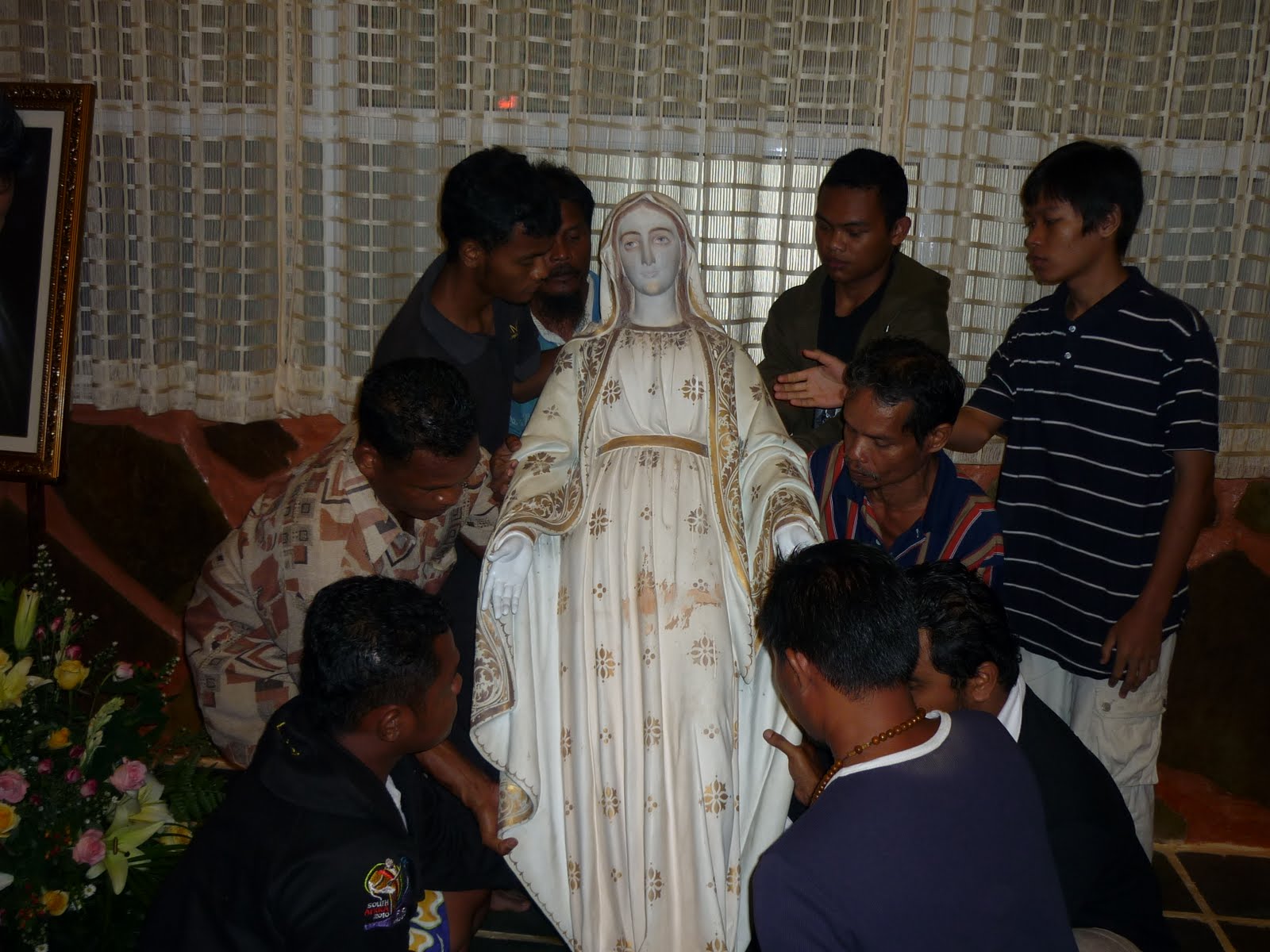
On Saturday, 28th May, we celebrated the 6th day of novena with the unveiling of our Lady’s statue with a Special Blessing. Throngs of people turned up for this historical event. People of all ages, from the elderly to the young gathered for this momentous occasion which started at 1715hrs with the rosary to Our Lady followed by mass, which was celebrated by Parish Priest, Fr. George Packiasamy and Asst. Priest Fr. Andrew Kooi.

It was then followed by a candle light procession with the Blessed Sacrament in Seremban town, a first after 1950s. The faithful parishioners continued with reciting the rosary and singing.

The procession ended back at the main entrance of Church where the refreshed statue of the Our Lady of Immaculate Conception was unveiled looking serenely over Seremban town as she has for the past 45 years. Doves were set free and the night ended with breathtaking fireworks, food and fellowship.

History of the 78-year old statue of Our Lady of Immaculate Conception of Church of the Visitation:

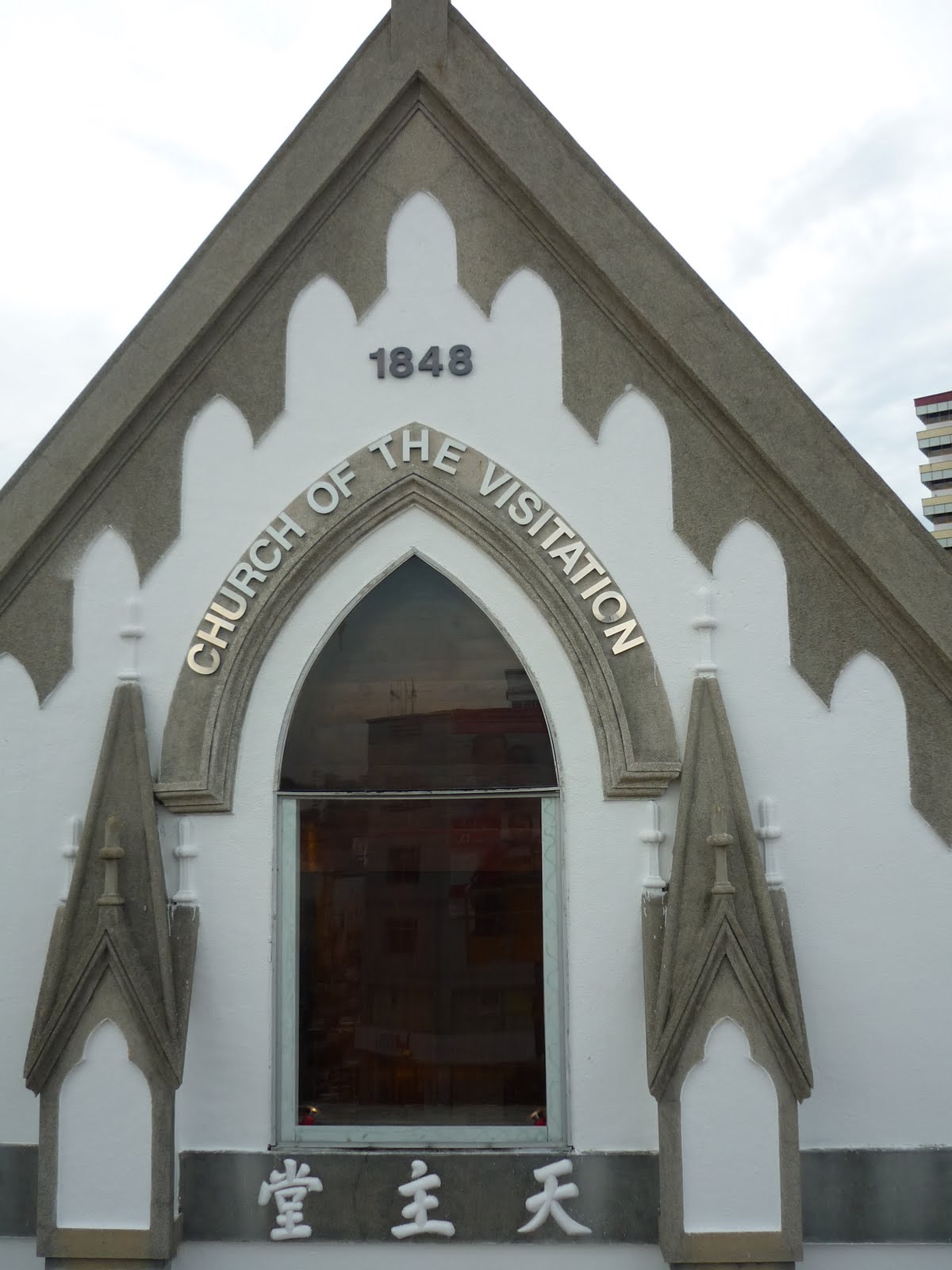
It was first installed in the main sanctuary of the Church of Visitation in 1933 by Fr Georges Auguin an MEP priest and (the then) Fr Dominic Vendargon. In 1966 residents priests at the Visitation – Fr Paul Wan, Fr Edward Limat, Fr Pallier and Fr Joseph Tsai – had the statue relocated to the front of the Church. It was elevated above the main entrance overlooking Seremban town.

Forty-Five years later on 12 May 2011 the statue was taken down and intending to replace it with the two statues depicting the identity of the parish of the Visitation – Mother Mary visiting Elizabeth but it didn’t materialised at the end. On the 28th May the 78- year old statue of Our Lady was restored to its original. She is very happy now happy to have “gone back home”. The two new statues depicting the Visitation is now placed in the grotto for the moment.

(Written by Samantha Wong)


"I alone cannot change the world, but I can cast a stone across the waters to create many ripples."
Mother Teresa
"If we pray, we will believe; If we believe, we will love; If we love, we will serve."
Mother Teresa